Browser notifications in Google Chrome can distract users, leak sensitive information, and be abused for phishing or social engineering. Turning them off centrally reduces the chance that someone will click a malicious or misleading notification. With Microsoft Intune you can disable Chrome desktop notifications on managed Windows devices using a single Settings catalog profile: enable Default notification setting under Google Chrome → Content settings and set it to Do not allow any site to show desktop notifications. This guide walks through creating and assigning that profile.
Why Turn Off Chrome Notifications?
Disabling notifications at the policy level helps with:
- Security . Malicious or spoofed notifications can trick users into visiting phishing sites or approving unwanted actions; blocking all desktop notifications removes that vector.
- Privacy . Notifications can expose content (e.g. email previews) on the lock screen or to others; disabling them avoids accidental exposure.
- Focus and productivity . Fewer pop-ups mean less interruption during work.
- Consistency . One policy ensures the same behavior across all managed Chrome instances without relying on user choices.
What You’ll Configure
You will create one Settings catalog configuration profile for Windows 10 and later, add the setting Default notification setting under Google → Google Chrome → Content settings, set it to Do not allow any site to show desktop notifications, then assign the profile to the users or devices that should have notifications disabled.
Step 1: Create the Configuration Profile
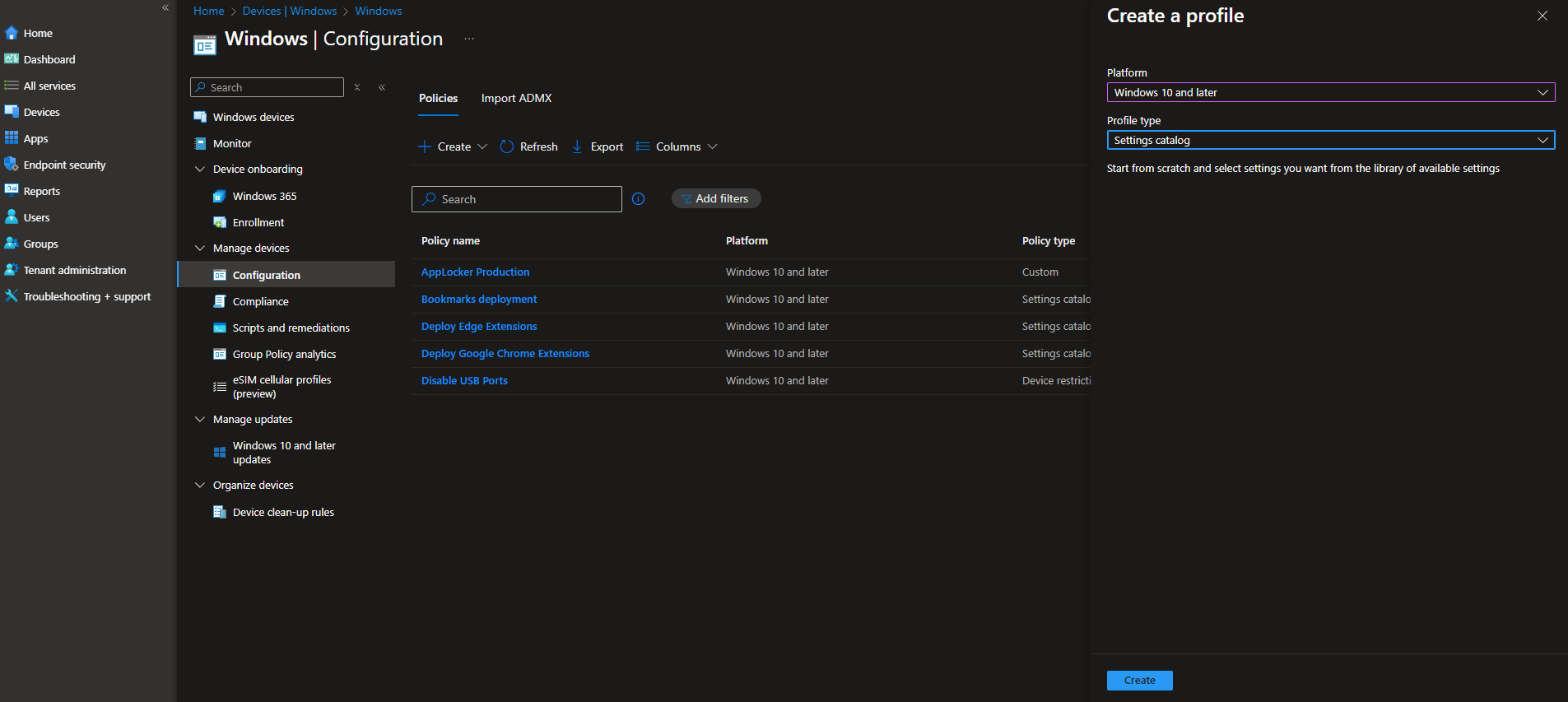
In the Microsoft Intune admin center, go to Devices → Windows → Configuration profiles. Click Create → New policy. Set Platform to Windows 10 and later and Profile type to Settings catalog. Click Create.
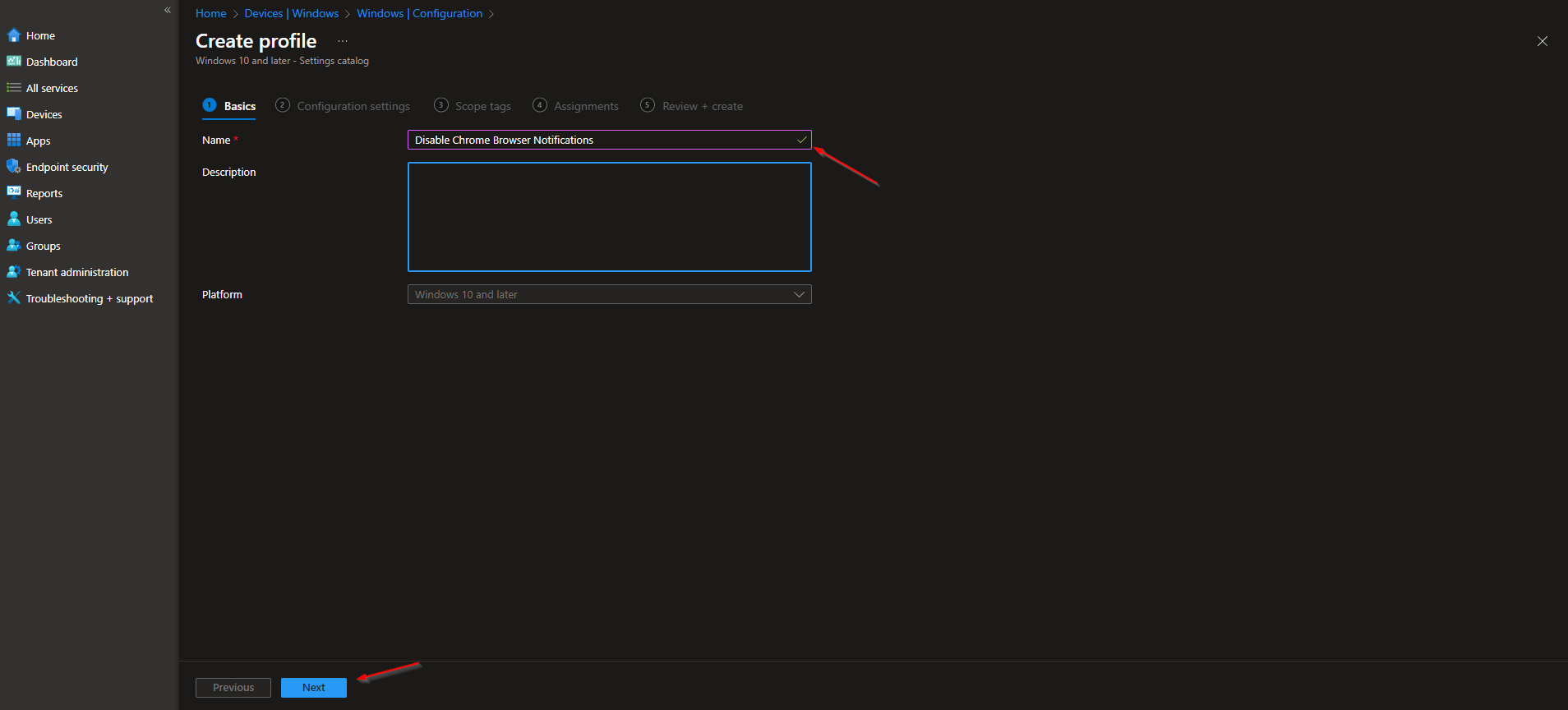
On the Basics tab, enter a Name (e.g. “Chrome – Disable desktop notifications”) and optionally a Description. Click Next.
Step 2: Set the Notification Policy
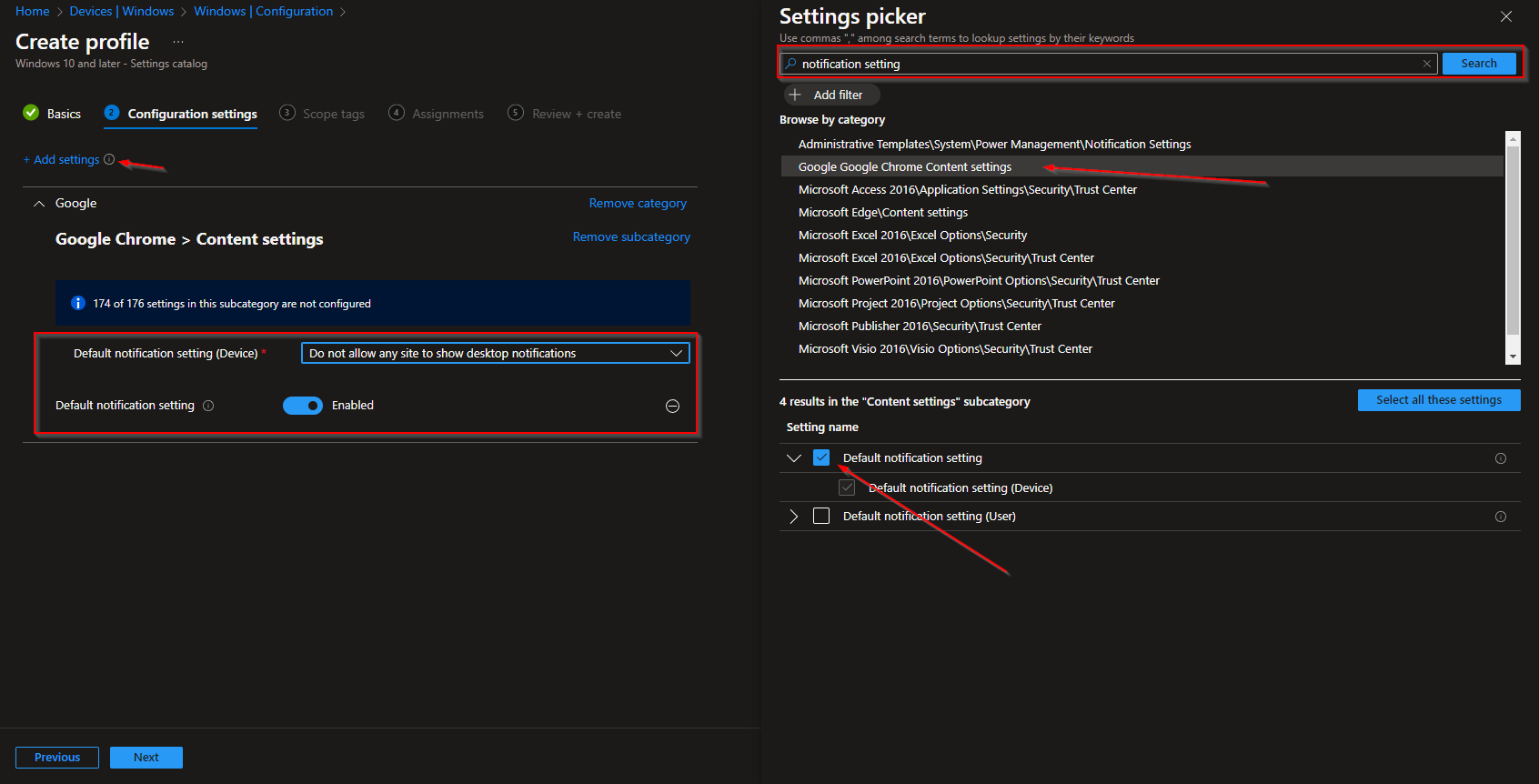
On Configuration settings, click Add settings. Search for notification setting (or Content settings). Open Google → Google Chrome → Content settings, select Default notification setting, and enable the setting. Set the value to Do not allow any site to show desktop notifications. Click Next.
Set scope tags if your tenant uses them, then on Assignments add the groups (or All Users / All Devices) that should receive this policy. Click Next, then Review + create, and Create.
After the profile syncs to targeted devices, Chrome will no longer show desktop notifications from any website for those users. Existing per-site notification permissions are overridden by this policy.
Wrap-up
You can disable Chrome browser notifications with Microsoft Intune by creating a Settings catalog profile for Windows 10 and later, enabling Default notification setting under Google Chrome → Content settings, and setting it to Do not allow any site to show desktop notifications. Assign the profile to the users or devices where you want notifications blocked. For a similar approach in Microsoft Edge, you can use a Settings catalog profile to disable Edge desktop notifications; the steps are analogous (Content settings → notifications).